No Egg Recipes – Delicious Cooking Without Eggs

How to make scrambled oats without egg: a protein-packed, egg-free morning technique
For How to make scrambled oats without egg. Discover Elsie Marlow's tested method for protein-packed scrambled oats without eggs. Perfect for allergies, this
I know the disappointment of a breakfast that promises comfort but ends up soggy and bland, which is why I perfected how to make scrambled oats without egg in my busy kitchen in Castleton.
In under a few trials, I learned to coax a soft, curd-like texture from oats and plant protein so mornings feel satisfying and quick.
This is the version I cook for my daughter Molly, whose egg allergy pushed me to reimagine familiar textures.
- Texture target: tender, slightly curdled but not wet
- Reliable swap/tool: use a neutral plant protein or silken tofu if soy is fine
- Make-ahead: cool, portion, and refrigerate for grab-and-go breakfasts
Table of Contents
Table of Contents
Vegan Scrambled Protein Oats
A quick, protein-packed vegan breakfast that transforms oatmeal into a scrambled texture using a unique cooking technique.
PREP TIME
5 mins
5 mins
COOK TIME
8 mins
8 mins
TOTAL TIME
13 mins
13 mins
Servings: 1 serving
Course: Snack
Cuisine: Vegan
Calories: 385
🥄 Ingredients
- 1 ripe banana
- 1/2 cup (45 g) rolled oats
- 2 tbsp (15 g) plant-based protein powder
- 1 tbsp (5 g) shredded coconut
- 1 tbsp (7 g) ground flax seeds
- 1 pinch salt
- 1/4 tsp cinnamon
- 1/4 tsp cardamom
- 1/4 cup (60 ml) plant milk
- 1 tsp coconut oil (optional)
- Your favorite oatmeal toppings
👩🍳 Method
- Mash the banana in a bowl, then add rolled oats, plant-based protein powder, shredded coconut, ground flax seeds, salt, cinnamon, cardamom, and plant milk. Mix to combine.
- Heat coconut oil in a non-stick skillet over medium heat if needed. Add the batter to the pan and flatten into a pancake shape.
- Cook for 3-4 minutes until golden brown, then flip and cook for another 3-4 minutes on the other side.
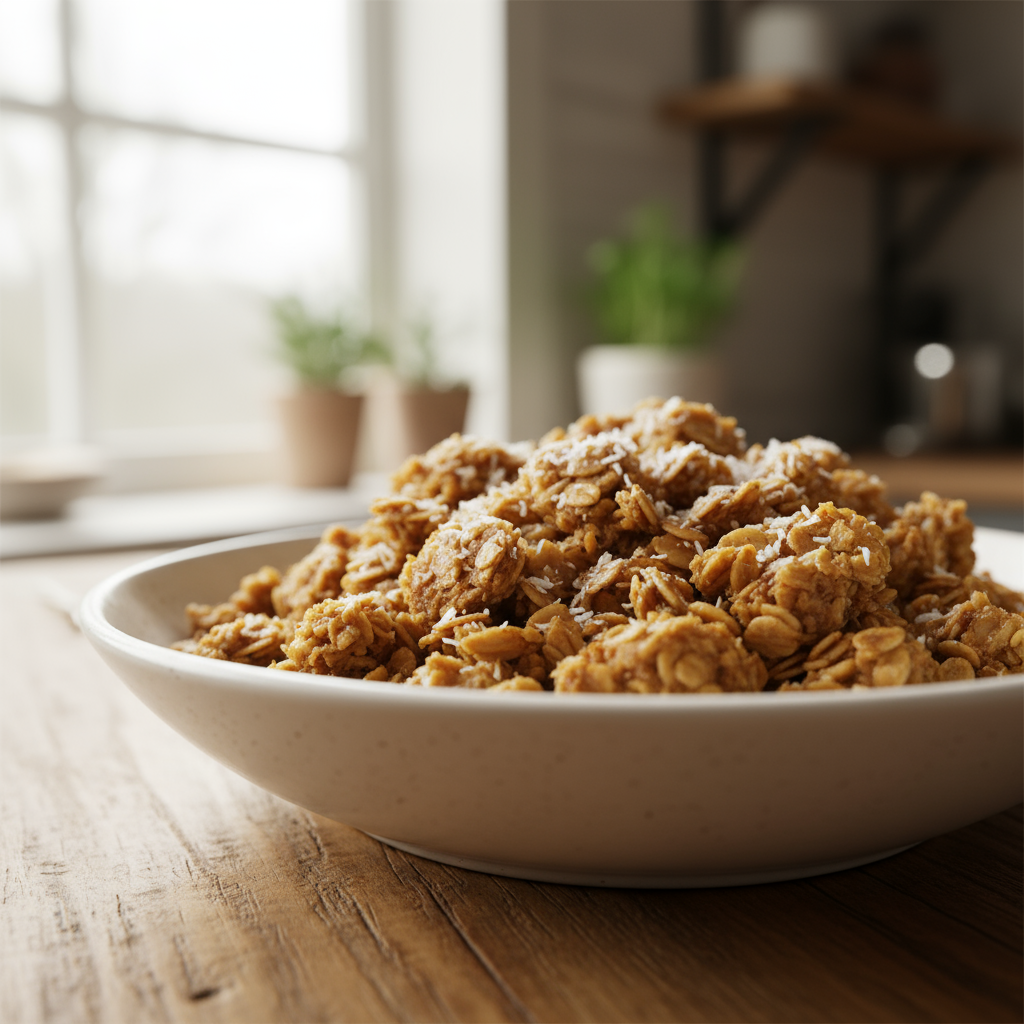
- Use a spatula to cut the pancake into smaller pieces and scramble until desired texture is achieved.
- Transfer to a bowl and add your favorite oatmeal toppings.
Notes: The oats are done when golden brown and easily scrambled. Store leftovers in an airtight container in the refrigerator for up to 3 days. Reheat gently in a skillet with a splash of plant milk.
Why This Recipe Works
I want to explain what makes this egg-free approach deliver the same comfort and bite as classic scrambled eggs, because understanding how stops repeated trial-and-error.
Oats contain starches and protein that soften and bind when hydrated, and when I combine them with a light plant-based binder, I get curds instead of a porridge.
The pancake-flipping technique I developed traps steam and encourages a gentle set, creating little clusters that mimic scrambled curds.
Early attempts were gluey or too loose, but adjusting moisture and folding instead of constant stirring produced the curd texture I wanted.
My experiments taught me that the balance between hydration and protein binder is key.
Too much liquid makes a porridge, too little leaves dry granules.
The credible protein lift comes from adding a concentrated plant protein or silken tofu while keeping the mixture soft.
After many failed pans and a few burned batches, I learned to read the pan and rely on tactile cues, not timers.
Those failures are my proof that the final approach is robust and repeatable in a real home kitchen.
Ingredient Notes & Substitutions
I will describe the ingredient choices as a narrative so you can adapt this for allergies, budget, and taste.
Rolled oats give a creamier mouthfeel and more forgiving texture than instant oats, while steel-cut oats will need more hydration if you choose them for a chewier result.
For a protein boost you can choose a neutral-tasting plant protein powder or soft silken tofu; pea and soy proteins give a fuller, egg-like body, whereas brown rice protein tends to be grainier but still useful.
If you avoid soy, opt for pea protein or a blend of oat and hemp protein.
Aquafaba and flaxseed “eggs” can act as binders in a pinch, but they change flavor and mouthfeel in different ways I describe below.
For dairy-free creaminess, plain unsweetened plant milks work well.
Nut milks bring a faint nuttiness that pairs with cinnamon or maple-style toppings, while oat milk reinforces the oat flavor.
If gluten is a concern choose certified gluten-free oats; cross-contamination is the main issue to watch for.
For those with nut allergies, drop nut milks and use oat or soy milk if tolerated.
I often use nutritional yeast and a pinch of turmeric for color and savory depth in the egg-like versions, and kala namak is an option for that sulfurous note if you are not avoiding strong-flavor ingredients.
When substituting, keep a consistent mindset: replace protein with protein and binders with binders.
The goal is to maintain the ratio of dry-to-liquid so the mixture will form tender clusters during the gentle cook.
If you try chickpea flour as a base for a thicker, chickpea-forward version, mix it with extra water to avoid a batter that sets too dense.
These narrative notes should help you tailor the dish without needing exact swaps, so you can experiment safely for allergies and taste.
Equipment Notes
Good equipment choices make the difference between a tidy scramble and a frustrating mess.
I favor a medium nonstick skillet for reliable release and an offset spatula or a flexible turner for the pancake-flip technique that creates folds and curds.
A wide, shallow pan encourages even evaporation and offers a larger surface for the oatmeal to set in patches.
Use a sturdy mixing bowl and a whisk or fork to blend the binder and protein until smooth; lumpy binder can lead to uneven texture.
A lid is useful to gently trap steam when you want a softer set, and a heat-diffusing plate or lower stove setting helps avoid hot spots.
Method Overview: The method is simple in concept: hydrate oats with a binder, combine with plant protein or soft tofu for body, and cook gently while coaxing the mixture into clusters with folding and a flip technique that encourages steam expansion and curd formation.
The goal is texture cues, not exact timings, so watch for visual and tactile signs as you cook.
Pro Tips & Troubleshooting
After dozens of breakfasts I developed a set of practical pro tips that fix the problems I ran into.
If the texture becomes gluey, it usually means the mix was overworked or too dry; a splash of plant milk while off heat and a gentle fold brings back tenderness.
If the scramble is too loose and soupy you need a stronger binder or a touch more protein – a small scoop of neutral protein powder or a little silken tofu stirred in usually helps.
Grainy protein powders can create a chalky finish; blend them with a small amount of liquid first, then whisk into the oats.
The pancake-flip technique is a breakthrough for texture: encourage the mixture to set in patches, then use the spatula to flip a set patch so the underside cooks and the top can continue to set, creating layered curds.
If patches stick, lower the heat and add a little fat to the pan for release.
When things brown too quickly on the outside but remain wet inside, reduce heat and give the pan a gentle shake or partial cover to allow even steam distribution.
For reheating, add a splash of liquid and fold gently rather than microwaving dry, which can toughen the mixture.
When in doubt, trust your senses: the final scramble should feel tender with slight resistance, look matte rather than glossy, and have defined clusters instead of a single wet mass.
Keep notes on adjustments so you repeat successes and avoid the missteps that once filled my trash can.
Variations & Flavor Twists
This base is forgiving and accepts many flavor directions.
For a savory, egg-like profile I boost umami with nutritional yeast, a pinch of turmeric for warm color, and smoked paprika for depth.
Fresh herbs folded in at the end bring brightness; chives and parsley are classic, while dill pairs beautifully with lemony finishes.
If you prefer a spiced breakfast, try curry powder and sautéed onions with spinach for a savory, vegetable-forward bowl similar to my flavorful eggless fried rice.
On the sweet side, flavors from my eggless cinnamon rolls recipe with cinnamon, vanilla, and a natural sweetener make a comforting treat that still feels substantial when I add a scoop of neutral plant protein or a dollop of nut butter.
For texture, stir in chopped roasted mushrooms and caramelized shallots for an adult brunch version, or add roasted tomatoes and avocado for a lighter plate.
I often rotate between a classic savory as my daughter enjoys and a sweet version for visiting friends.
Those looking for vegan scrambled oats will find this flexibility one of the best features, because you can change the profile without losing the satisfying mouthfeel that mimics eggs.
Serving & Storage
Serving this scramble is simple: pile it on toast, fold into a breakfast burrito, or serve alongside roasted vegetables in a hearty eggless breakfast casserole for a fuller plate.
For make-ahead convenience I cool portions quickly, transfer them to airtight containers, and refrigerate.
Leftovers keep well when stored airtight and cold, and I label containers with the date so I rotate older portions first.
For freezing, I portion into single serves and freeze flat so they thaw fast and reheat evenly; thaw in the refrigerator overnight if possible.
Reheating works best on a low heat in a skillet with a small splash of plant milk or water to restore moisture, stirring gently until warm.
The microwave works in a pinch if you add a touch of liquid and stir halfway through, but stovetop reheating preserves texture better.
If you separated components, store creamy or saucy add-ons separately and combine at service to keep the scramble from becoming soggy.
These storage practices close the gap I saw in other recipes that lacked clear guidance on keeping texture through reheating.
Common Mistakes to Avoid
I have a mental checklist of the mistakes that wrecked early batches so you do not repeat them.
One is treating the mixture like porridge and stirring constantly; constant agitation prevents curds from forming.
Another is adding too much binder at once; adjust in small increments and trust texture cues.
Using grainy, unblended protein powders without pre-mixing causes streaks and pockets of dry powder that never hydrate.
Cooking on too high a heat leaves the exterior done and the interior undercooked, while too low heat can make the mix gluey by prolonged exposure.
Avoid skipping the rest time after mixing binder and oats; a short rest helps the oats hydrate and reduces the chance of a gummy finish.
Finally, do not assume all plant proteins behave the same: some absorb more liquid or thicken quickly, so try a small test batch when switching brands.
Learning these pitfalls saved me many mornings and made the final recipe reliable for family breakfasts.
Nutrition Benefits of Plant-Based Breakfasts
I prioritize protein and fiber in morning meals because they sustain energy and support steady hunger until lunch.
This egg-free scramble pairs the soluble fiber of oats with concentrated plant protein, giving a balanced plate that feels filling and nourishing.
Compared to a traditional scramble, the profile shifts toward more fiber and a different set of micronutrients depending on your protein choice; adding nutritional yeast or fortified plant milk can boost B vitamins and minerals.
You can build a meal around this scramble to include healthy fats from avocado or seeds, and vegetables for added vitamins and bulk.
For households with egg allergies or those following a vegan diet, this approach supplies a satisfying, nutrient-dense alternative that keeps mornings simple and inclusive.
Budget-Friendly Protein Options
One of my priorities is making high-protein breakfasts affordable.
Canned legumes, like chickpeas, can be mashed and blended into a binder to boost protein inexpensively.
Silken tofu is often cost-effective and stretches a small amount of plant protein across several breakfasts.
Powdered pea protein or blended seed mixes can be economical when bought in bulk; I keep a neutral powder on hand for weeks when we need extra protein.
Seeds, particularly pumpkin or sunflower seeds, toast well and add texture plus protein without breaking the bank.
Oats themselves provide baseline protein, and pairing them thoughtfully with inexpensive binds and a splash of plant milk gives a high protein vegan breakfast that satisfies both wallet and appetite.
By rotating these budget-friendly choices I keep costs down while keeping variety for Molly and visiting friends.
Conclusion
I wrote this guide from my home kitchen in Castleton after years of testing so you have a dependable path to a satisfying, egg-free scramble.
My daughter Molly’s allergy started this journey and kept me tinkering until I had a repeatable technique that creates curd-like clusters, robust protein, and a comforting plate for anyone who cannot or chooses not to eat eggs.
Practice the texture cues, keep a neutral protein or soft tofu on hand, and do not be afraid of a few messy pans along the way; those failures taught me what works.
I hope this becomes your go-to quick breakfast, a reliable high protein option that welcomes everyone to the table. – Elsie Marlow
Love this recipe? Follow us on Facebook and Pinterest and explore more creative ideas on our food blog!
Frequently Asked Questions
Best plant-based protein powders for scrambled oats
Neutral pea protein and blended plant-protein mixes are my top picks for texture and flavor. Pea protein gives body without a strong taste, while brown rice blends can be combined with hemp for a more complete amino acid profile. Choose unflavored powders and pre-mix them with a little liquid to avoid graininess.
How to achieve the perfect scrambled texture
Aim for a tender, slightly curdled finish by balancing hydration and binder. Let the oats rest briefly after mixing so they hydrate, then cook gently and form set patches that you fold or flip to create clusters. Rely on visual and tactile cues rather than strict timing.
Storage and reheating instructions for leftover scrambled oats
Cool portions quickly and store airtight in the refrigerator, where they keep well for several days. Freeze single-serve portions flat for longer storage. Reheat gently on the stovetop with a splash of liquid to restore moisture, or use the microwave in short bursts, stirring between intervals.
Allergen-free substitutions for common ingredients
Use certified gluten-free oats for gluten sensitivity, oat or pea milk instead of nut milks for nut allergies, and pea protein or blended seed proteins instead of soy if soy is an issue. Aquafaba or ground flaxseed can replace other binders, though they alter flavor and texture.
Nutritional benefits compared to traditional scrambled eggs
The egg-free scramble offers more fiber and plant-based micronutrients, and when fortified with a concentrated plant protein or tofu it can provide comparable protein satiety. It is also a good choice for those who need egg-free or vegan options while still wanting a filling breakfast.
Time-saving tips for busy mornings
Make a batch the night before, portion into containers, and reheat gently with a splash of liquid. Keep a ready-made binder-protein blend in the fridge to combine with oats quickly, and freeze single portions for truly grab-and-go breakfasts.
How to make scrambled oats gluten-free
Start with certified gluten-free rolled oats and ensure any added protein powders, nutritional yeast, or flavorings are labeled gluten-free to avoid cross-contamination. The technique remains the same, just confirm ingredient sourcing.