No Egg Recipes – Delicious Cooking Without Eggs

Eggless muffin: Soft, Moist Dairy-Free Chocolate Chip Muffins — Elsie Marlow’s Pantry-Friendly Method
Eggless muffin yields soft, dairy-free chocolate chip muffins with a pantry-friendly method, tested in a home kitchen. Discover Elsie's trusted method.

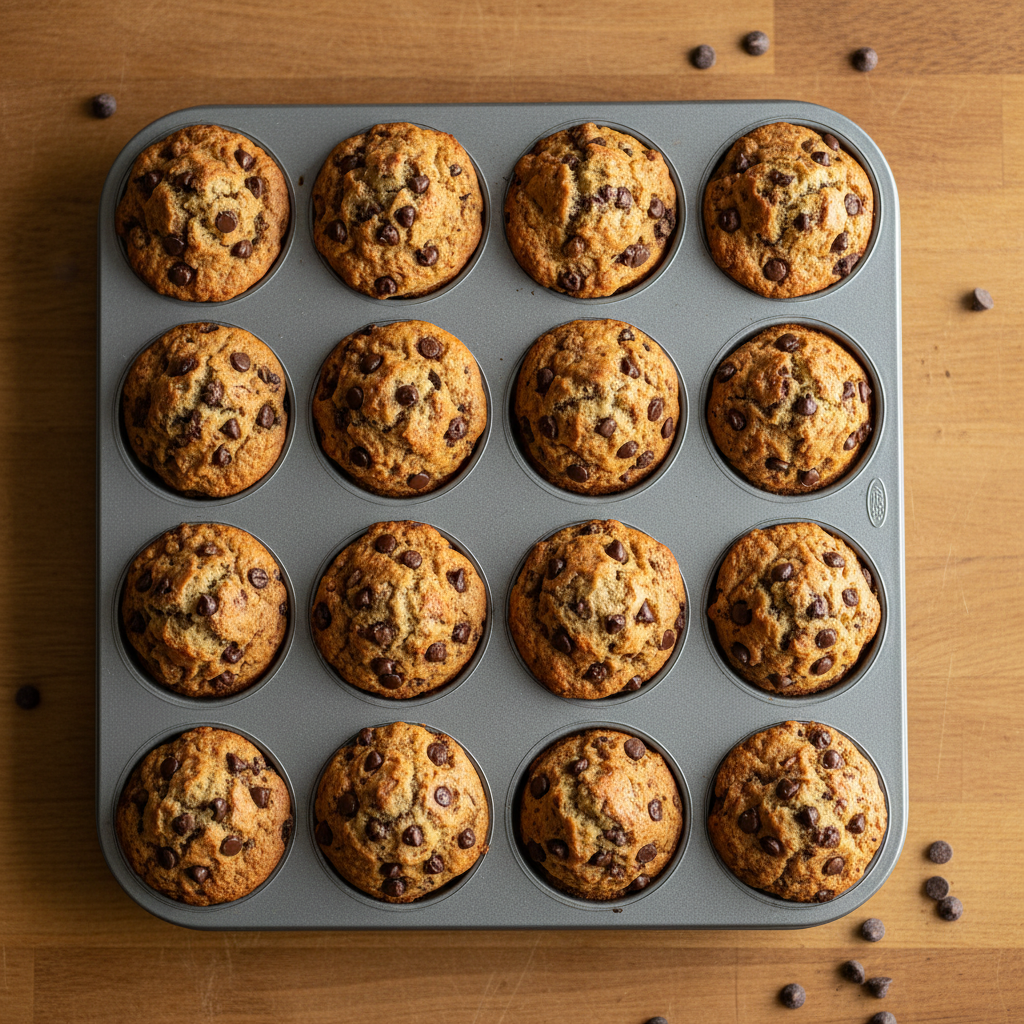
I’m Elsie Marlow, a home cook from Castleton in the Peak District, and I promise you a reliably soft, moist result using a straightforward pantry-friendly technique for an Eggless muffin that beginners can trust. In my busy kitchen I learned to balance batter thickness, gentle handling, and a single reliable swap so every batch rises, domes, and tastes homely. Below I give the sensory cues that saved my baking after a string of flat, gummy failures, and a short plan so weekday breakfasts are quick and fuss-free.
- Texture target: glossy but not runny batter, domed golden tops with tender crumb
- Reliable swap/tool: maple syrup for moisture and a well method to avoid overmixing
- Make-ahead: freeze cooled muffins individually; reheat briefly to revive freshness
Table of Contents
Table of Contents
Easy Eggless Chocolate Chip Muffins
Soft, moist muffins baked without eggs, loaded with vegan chocolate chips. Made with dairy-free milk and butter, these muffins are vegan-friendly, quick to whip up, and perfect for snacks or a quick breakfast.
PREP TIME
10 mins
10 mins
COOK TIME
25 mins
25 mins
TOTAL TIME
35 mins
35 mins
Servings: 12 muffins
Course: Snack
Cuisine: American
Calories: 252
🥄 Ingredients
- 2 cups self-raising flour (250 g)
- 0.5 cup maple syrup (120 ml, 160 g)
- 0.75 cup dairy-free milk (180 ml)
- 0.75 cup dairy-free butter, melted (170 g)
- 0.5 cup vegan chocolate chips (85 g)
- 1 teaspoon vanilla extract (5 ml)
👩🍳 Method
- – In a large mixing bowl, whisk together the self-raising flour and create a well in the center. Add maple syrup, dairy-free milk, melted dairy-free butter, and vanilla extract into the well and whisk until just combined; do not overmix.
- – Gently fold in the vegan chocolate chips.
- – Scoop batter into a well-greased muffin tin with 12 cups, filling each cup to about the top.
- – (Optional) Top muffins with additional vegan chocolate chips.
- – Bake in a preheated 350°F (177°C) oven for about 25 minutes, or until a toothpick inserted into the center comes out clean.
- – Remove muffins from the oven and allow to cool in the pan for 10 minutes, then transfer to a cooling rack to cool completely.
- – Store in an airtight container once completely cooled.
Notes: Well method: mix wet ingredients in a well of the dry ingredients and whisk until just combined; fold in chips gently; do not overmix. Bake until toothpick comes out clean; cool completely on rack before storing in airtight container.
Why This Recipe Works: Science Behind Eggless Muffins
In my early attempts I treated the problem like a mystery to solve, and that curiosity paid off. Eggs do three jobs in a traditional muffin: they bind, add lift, and contribute moisture. Without them, you need to let other ingredients share those jobs. Self-raising flour brings built-in leavening, the liquid and fats create steam and tenderness, and maple syrup or another syrupy sweetener helps with both moisture and a glossy batter.
The well method is critical because it keeps the wet ingredients from overdeveloping gluten when they meet the flour all at once. When I learned to respect those roles, my muffins stopped being flat gardens of disappointment and started coming out with the bakery-style domes I remember from before Molly’s egg allergy changed our pantry. eggless chocolate cake.
Two sensory cues guide me through the process: the batter should look glossy but not runny, and the surface of the muffins should set into a deep golden color with a domed top. Those cues tell me the structure and moisture balance are right. If the batter is too thin, the muffins spread; if it is too stiff, they stay dense. That middle ground is where this recipe lives, and it is reproducible once you understand why each component matters.
Ingredient Notes & Substitutions
I always explain ingredients as tools, not rules. In this recipe I use self-raising flour for its reliable lift, maple syrup as a natural liquid sweetener and moisture agent, a neutral dairy-free milk and a block-style dairy-free butter for tenderness and flavor, plus vegan chocolate chips and vanilla for taste. If you prefer a different sweetener, keep in mind that liquid sugars like maple syrup add moisture and shine to the batter; granulated sugar will dry the mix out unless you adjust liquid. For fat, a spreadable dairy-free butter gives a familiar crumb and helps the top brown, while neutral oils produce a slightly different, but still pleasant, open crumb.
For gluten-free baking, a well-balanced cup-for-cup gluten-free blend with added xanthan or guar often replaces self-raising flour, though you may need a touch more binder to preserve structure. When swapping fats, choose options that remain solid at room temperature if you want a similar mouthfeel to dairy-free butter; refined coconut oil, dairy-free margarine, or a neutral vegetable oil are practical alternatives. For chocolate, use vegan chips or roughly chopped dairy-free bars; larger pieces create pockets of richer bites, while mini chips disperse more evenly. Vanilla is small but essential, it rounds flavors and makes the maple notes sing.
Over the years I learned to respect texture hints over exact naming. If a substitute makes the batter much thinner, add a tablespoon or two more flour; if it becomes very stiff, a splash more plant milk will rescue it. These are adjustments I taught myself after many failed batches, so you do not need to be afraid of experimenting gently.
Equipment & Tools for Eggless Muffins
You do not need fancy gadgets. I use a standard 12-cup muffin tin, paper liners for easy release, two mixing bowls, a rubber spatula, a wooden spoon or large spoon for stirring, and an oven thermometer so the heat is honest. A cooling rack is helpful so muffins do not steam themselves soggy once they come from the oven. A bench scraper or a small scoop helps keep muffin tops tidy while filling the tin. The right tools make the well method effortless: one bowl for dry ingredients, one for wet, and a gentle hand for folding. eggless pound cake.
Pro Tips & Troubleshooting for Eggless Muffins
After a long string of trials, I collected a handful of habits that prevent the most common failures. First, do not overmix. Stop folding when you can see no dry pockets of flour; small streaks are okay. Overmixing develops gluten and makes the crumb tough. Second, fold chocolate chips in gently so they do not deflate the batter or sink to the bottom. Third, watch batter consistency: it should be glossy and flow slowly from a spoon, but not be as thin as pancake batter. If it looks too wet, add a tablespoon of flour at a time; if it is too stiff, a tablespoon or two of plant milk will fix it.
If your muffins come out flat or without a dome, it is almost always due to overmixing, too little leavening, or an oven that is not hot enough. An oven thermometer is a small, inexpensive investment that solved so many problems for me. If the interior is gummy, they needed a little longer in the oven or the batter had too much liquid. For tops that brown before the center sets, lower the oven rack one position or tent the tray loosely with foil partway through baking.
When muffins crumble or seem dry, you probably overbaked them or reduced the fat too much when switching ingredients. A final trick I love: adding a teaspoon of extra syrup-like sweetener or a tablespoon of dairy-free yoghurt can restore softness without making them heavy. These are small course corrections I discovered after many batches that did not behave, so you can avoid the same mistakes from the start. eggless pumpkin blondies.
Variations & Flavor Twists for Eggless Chocolate Chip Muffins
One of my favorite parts of this recipe is how adaptable it is. The basic mix welcomes citrus zest for brightness, a handful of chopped toasted nuts for texture, or a tablespoon of cocoa powder for a chocolate batter base. For a fruit-forward option, fold in fresh berries at the end and handle them gently so they do not bleed into the batter. I also use this framework to make egg-free blueberry muffins; the same gentle technique and attention to batter thickness work beautifully with berries. If you want bakery-style contrast, top the batter with a small sugar crumble or a few extra chips for an attractive finish. eggless atta chocolate cake.
For different chocolate options, try vegan dark chocolate for richness, dairy-free white chocolate for sweetness, or mini chips for even distribution. If you bake for someone with nut allergies, omit the nuts and replace them with extra chips or toasted oats for crunch. For a seasonal twist, a teaspoon of ground cinnamon or pumpkin spice blends well with maple notes. These variations let you keep the same reliable technique while offering new flavors for breakfast or tea time.
Serving & Storage / Make-Ahead & Freezing
I often bake a double batch and store extras because a homemade stash makes weekday mornings effortless. For serving, I like to warm a muffin for 10 to 20 seconds so the interior feels soft and the chips re-melt slightly. A light smear of dairy-free butter or a drizzle of extra maple syrup is wonderfully indulgent. eggless tres leches cake.
Storage is straightforward. Room temperature: keep muffins in an airtight container for 2 to 3 days. Refrigerator: store in an airtight container for up to 1 week, but bring them to room temperature or warm briefly before serving so they regain tenderness. Freezer: wrap muffins individually or in a single layer and freeze up to 3 months; thaw at room temperature, then warm gently. I recommend freezing cooled muffins, not while still warm, and reheating from frozen for a few minutes so they regain a fresh-baked texture. These tips are what saved my freezer stash after a frantic school morning when I needed something quick and reliable for Molly.
Common Mistakes to Avoid in Eggless Muffins
My top mistakes from early baking days became my teaching points. Mistake one: mixing until perfectly smooth. Muffin batter should be lumpy; overworking it makes the crumb tight. Mistake two: relying on large mix-ins without adjusting batter volume. Too many chips or fruit will weigh the batter down and prevent a good rise. Mistake three: skipping the well method and pouring liquids all at once into the flour – that can create uneven pockets of gluten. Mistake four: assuming oven temperature is accurate. A low oven yields pale, flat tops; a hot oven can burn outsides before interiors set. Lastly, changes in ingredient brands, especially flours and dairy-free spreads, can change absorption. When you switch brands, look for those sensory
cues and adjust by tablespoons where needed.
Each of these mistakes taught me something practical. After many flat, underbaked batches I learned to trust the batter feel, to fold gently, and to make small adjustments rather than big ones. Those small corrections produce consistent muffins that please everyone at the table.
Egg Substitutes That Work in Muffins
You have several dependable options for replacing eggs in muffin recipes. Aquafaba whips or binds with a light texture, flaxseed mixed with water creates a gel that helps structure, and mashed fruit like banana or applesauce adds both moisture and tenderness while contributing flavor. Silken tofu blended smooth provides density and richness, and commercial egg replacers are engineered for predictable rise. Choose based on what you want the egg to do: for lift and lightness, aquafaba or a commercial replacer are excellent; for moistness and sweetness, applesauce or mashed banana work well. I experimented with each after Molly’s diagnosis and wrote down how each changed crumb and flavor so you can choose with confidence.
Muffin Rise Without Eggs: Leavening Secrets
Without eggs, the rise relies on chemical leaveners, steam, and trapped air. Self-raising flour simplifies the process because it includes a measured amount of raising agents; otherwise, a combination of baking powder and a small acid can be used. When you mix gently, you keep tiny air bubbles intact, and as the batter hits the heat of the oven those bubbles expand. Steam from the liquid ingredients also provides lift during the initial oven spring. Proper batter viscosity matters: too loose and those bubbles float away, too tight and they cannot expand. That is why the well method and a limited number of folds are so effective; they give you lift without overworking the dough.
I also found that distributing mix-ins evenly and avoiding an overloaded tin helps every muffin get an equal share of lift. My early batches often had one hero muffin while the rest were shy. Once I learned to scoop and level consistently, the whole tray rose together and we never argued over who got the good one.
Skip Eggs in Muffin Mix with Simple Substitutions
For quick reference, here are practical swaps I use in the kitchen. Aquafaba is a reliable lift substitute and works well in recipes where you want a lighter crumb. Ground flaxseed mixed with water makes a sticky binder that is familiar and easy to keep on hand. Applesauce and mashed banana are excellent if you want natural sweetness and moistness, though they add flavor. Silken tofu blended smooth is a neutral, protein-rich option that gives structure without much taste. Commercial replacers give predictability and are particularly useful if you bake frequently or need to scale a recipe.
My approach is to match the substitute to the role the egg plays. For lift, choose aquafaba or a commercial replacer. For moisture and tenderness, pick applesauce or banana. For a neutral, denser crumb, use silken tofu. These swaps helped me transform a string of experiments into a method I can reproduce on busy mornings with Molly and friends at the table.
Moisture and Texture: Achieving Tender Egg-Free Muffins
Texture comes from the relationship between fat, liquid, and flour. Maple syrup here pulls double duty: it sweetens and helps keep the crumb moist. Dairy-free butter or a similar fat contributes flavor and tenderness, and plant milk thins the batter so it pours slowly but holds shape. Too much liquid produces soggy results, and too much flour yields dryness, so small incremental changes are the key. When I first worked through the recipe I wrote notes after every batch, noting whether a tablespoon more of milk or a beat more folding made the crumb cakier or more tender. Those notes became a map for consistent results.
Gentle folding, the right batter viscosity, and moderate fat give you muffins with a fine yet soft crumb. After many failures, I now judge success by touch and sight: the batter should be glossy and just wide enough to mound when spooned, and the finished muffin should spring back slightly when tapped, with a moist interior that pulls away from the paper liner without crumbling. Those sensory cues keep baking enjoyable rather than stressful.
Conclusion
My journey from burnt, flat attempts to a reliable, tender dairy-free chocolate chip muffin taught me that technique and small adjustments matter more than perfection. The well method, careful folding, and an understanding of ingredient roles let you skip eggs without losing lift or tenderness. If you are new to egg-free baking, start with this approach and adjust by feel: glossy but not runny batter, domed tops, and a springy crumb mean success. I bake for family, for neighbours, and for Molly, and nothing brings me more joy than sharing a batch that tastes like care, not compromise. Try the method, take notes, and remember that a few early failures are simply steps to a better batch.
I hope this guide helps you bake confidently. For a fruit-forward change, my egg-free blueberry muffins use the same gentle technique and are another favorite in our kitchen.
Love this recipe? Follow us on Facebook and Pinterest and explore more creative ideas on our food blog!
Frequently Asked Questions
Is it possible to make muffins without eggs?
Yes. Muffins can be made without eggs by relying on chemical leavening, steam, and suitable binders or moistening agents. Self-raising flour or a combination of baking powder and baking soda provides lift, while ingredients like aquafaba, flaxseed gel, applesauce, or silken tofu replace the binding and moisture functions of eggs.
What can replace an egg in a muffin recipe?
Common replacements include aquafaba for lift and lightness, a flax ‘egg’ or chia gel for binding, applesauce or mashed banana for moisture and tenderness, silken tofu for a neutral, denser crumb, and commercial egg replacers for predictable results. Choose based on whether you want lift, moisture, or a neutral binder.
What makes muffins rise without eggs?
Rise comes from chemical leaveners and steam. Self-raising flour already contains raising agents, and baking powder releases gas when heated. Gentle mixing traps tiny air bubbles that expand in the oven, and steam from liquids contributes to oven spring. The well method helps preserve trapped air and avoids over-developing gluten.
Can you skip eggs in muffin mix?
Yes. Skipping eggs is straightforward if you balance the recipe with appropriate leavening and a substitute that addresses binding or moisture. Use a tested egg-free method, avoid overmixing, and check batter consistency. For many bakers, aquafaba or a flaxseed mix are reliable everyday substitutes.
How do I store eggless muffins to stay moist?
Keep muffins in an airtight container at room temperature for 2 to 3 days. Refrigerate for up to 1 week, but warm briefly before serving to restore tenderness. For longer storage, freeze wrapped or individually for up to 3 months and thaw at room temperature before reheating gently.
What are good substitutes for dairy in eggless baking?
Good dairy substitutes include plant milks like oat, almond, or soy, and block-style dairy-free spreads or refined coconut oil in place of butter. Dairy-free yogurts can add moisture and tenderness. Choose neutral-flavored options when you want minimal impact on taste, and remember that fat solid at room temperature helps mimic the texture of dairy butter.