No Egg Recipes – Delicious Cooking Without Eggs

Cucumber Carrot Salad with Sesame-Soy Dressing
Cucumber Carrot Salad delivers crisp, refreshing crunch with a sesame-soy dressing, tested in a home kitchen for solid results. Discover Elsie's method.

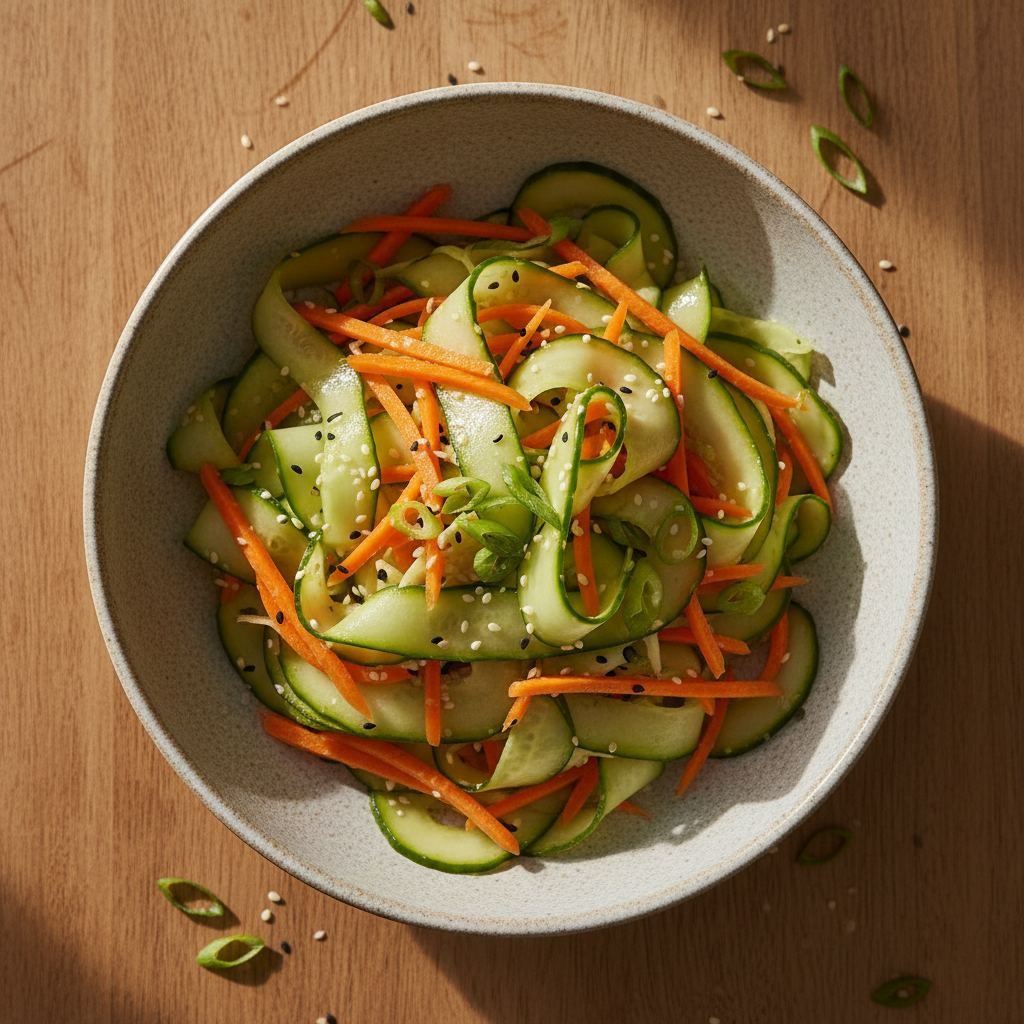
I make a bright, crunchy Cucumber Carrot Salad that wakes up weeknight plates with a nutty, savory sesame-soy dressing and reliably crisp vegetables. In my kitchen in Castleton I learned to coax the best texture out of cukes and carrots, balancing acidity and salt so the salad stays lively for hours. This post gives my tested method, sensory cues, and simple swaps so you get the same result every time.
- Texture target: crisp, hydrating vegetables with a light snap
- Reliable swap/tool: rice vinegar or apple cider vinegar, and a mandoline for even ribbons
- Make-ahead: dressing stores separately, salad keeps crisp if dressed just before serving
Table of Contents
Table of Contents
Cucumber Carrot Salad
A crisp, refreshing cucumber and carrot salad with an Asian-inspired sesame-soy dressing. Crunchy cucumber, bright carrots, and scallions tossed in a balanced dressing, finished with sesame seeds for a flavorful, quick-side dish.
PREP TIME
10 mins
10 mins
COOK TIME
0 mins
0 mins
TOTAL TIME
10 mins
10 mins
Servings: 4 servings
Course: Snack
Cuisine: Asian-inspired
Calories: 92
🥄 Ingredients
- 1 large English cucumber (approx 300 g; approx 1.25 cups sliced)
- 4-5 carrots (approx 200 g; 2-3 cups julienned)
- 2-3 green onions, sliced (approx 25 g; 0.25 cup)
- 2 tablespoons low-sodium soy sauce (30 ml; approx 27 g)
- 2 tablespoons rice vinegar (30 ml; 30 g)
- 1 tablespoon avocado oil (15 ml; 14 g)
- 1 teaspoon toasted sesame oil (5 ml; 4.5 g)
- 1 teaspoon Dijon mustard (5 ml; approx 5 g)
- 1 clove garlic, minced (about 3 g; 1 tsp)
- 1 tablespoon honey (15 ml; 21 g)
- salt to taste
- black pepper to taste
- 1 teaspoon sesame seeds (approx 2.5 g)
👩🍳 Method
- Slice the English cucumber in half or third, then slice each piece in half lengthwise, then slice the cucumber in half-moons.
- Optional: place the chopped cucumber on paper towels with a pinch of salt to release moisture.
- Peel the carrots, then cut into matchsticks or julienne.
- In a small bowl, whisk together soy sauce, rice vinegar, avocado oil, sesame oil, Dijon mustard, honey, salt, and pepper until incorporated.
- Slice the green onions and toss with cucumber and carrots, then add the dressing and sesame seeds; toss to coat.
- Refrigerate for 10 minutes if possible to let flavors meld, then serve.
Notes: No-cook salad. Keep refrigerated. Best eaten fresh; if making ahead, store dressing separately and toss just before serving.
Why This Cucumber Carrot Salad Works
I aim for a contrast of textures and a dressing that ties the cucumbers and carrots together without weighing them down. Cucumbers deliver a high water content and a cooling mouthfeel, while carrots bring firm, sweet crunch and color. The sesame-soy dressing adds umami and a toasty note that amplifies both vegetables rather than masking them. Over multiple test batches I learned to avoid oversalting early and to let a brief resting period marry flavors without making the cucumbers soggy. The result is a refreshing side that feels light, tastes rounded, and travels well to picnics or lunchboxes.
Ingredient Notes & Substitutions
Focus on ingredient quality and simple substitutions. Use firm, thin-skinned cucumbers for the snappiest texture; waxy or overripe cucumbers become mealy. Carrots should be young and not overly woody, or use baby carrots for convenience. For the dressing, toasted sesame oil offers the richest flavor in small measure, while neutral oil will keep the dressing milder. Soy sauce gives salt and depth; tamari is a straightforward gluten-free swap.
If you prefer no oil, increase the acidity slightly and whisk in a spoonful of tahini or a splash of aquafaba for body. Fresh aromatics like grated ginger and minced scallion brighten the mix; if you must substitute, powdered ginger works in a pinch, though the flavor is less vibrant. For a nut-free version, omit sesame seeds and use sunflower seeds for crunch. I often use rice vinegar for a mild tang, but apple cider vinegar gives a fruitier lift. These narrative substitutions preserve technique and texture without listing quantities, so you can adapt to pantry reality while keeping the same sensory goals.
Equipment & Tools Essentials
You only need a few reliable tools to make this salad repeatable. A sharp chef knife and a mandoline or vegetable peeler speed up uniform slices and ribbons, which matters more than exact thickness because even pieces dress consistently. A mixing bowl large enough to toss without spillage, a small bowl or jar for whisking the dressing, and a fine grater or microplane for ginger are helpful. For serving, a shallow bowl shows the colors best. Method overview: I trim and thinly slice the cucumbers, julienne or peel the carrots into ribbons, whisk the sesame-soy dressing until it emulsifies, and toss everything briefly, then rest the salad for five to fifteen minutes to let flavors mingle before a final taste
and adjustment.
Pro Tips & Troubleshooting
I learned most of my reliable techniques through mistakes, and I share them so you can skip the trial and error. If your cucumbers turn watery, you likely salted them too early or used a variety with thick skins. Salt sparingly up front, and if you need extra crispness, briefly press sliced cucumbers between paper towels to pull surface moisture. For evenly dressed bites, cut vegetables in consistent shapes: matchstick carrots and thin coin or half-mMoon cucumbers mix with the same ease. When balancing the dressing, taste for three signals: bright acidity, a savory mid-note, and a touch of toasted fat. If the dressing tastes flat, add a pinch of salt or a splash of vinegar; if it is too
sharp, a small sweetener or a bit more oil will soften it.
- Note: successes after many failures make the method trustworthy, so I include practical checks I used to fix texture or flavor early.
- If the dressing separates, whisk vigorously or shake in a jar before dressing the salad.
- To revive a slightly limp salad, chill briefly and add a fresh squeeze of acid just before serving.
Variations & Flavor Twists
This recipe adapts well to small flavor shifts. For an East Asian accent, add a splash of toasted sesame oil and a scattering of sesame seeds for crunch. A chili-sesame twist uses a chili crisp or a pinch of red pepper flakes for heat. To make it more Mediterranean, swap the soy for a light miso-thinned vinaigrette and use lemon instead of rice vinegar. For a heartier salad, fold in thinly sliced red cabbage or edamame for protein. I often make a cilantro-heavy version in summer and a mint-and-lime variant when I want brightness that cuts through richer mains. These variations keep preparation the same but shift the final flavor profile, so you can serve the dish with grilled fish,
tofu, or as a crunchy side to noodle bowls.
Serving, Make-Ahead & Storage
Serve the salad chilled or at cool room temperature. For best texture, store dressing separately and dress the vegetables just before serving; dressed cucumbers will soften over time. If you must prep ahead, combine the vegetables up to a day in advance and keep them airtight in the refrigerator, then toss with dressing within an hour of serving. Leftovers that have been dressed will keep for a day if chilled, but expect some loss of snap. To maximize crispness for leftovers, drain any excess liquid and add a handful of fresh carrot ribbons or cucumber coins before eating to refresh the mouthfeel.
Dietary Adaptations & Allergen Considerations
I cook egg-free for family and readers, and this salad is naturally free of eggs. For egg-free muffins
Scaling for More Servings
Scaling this salad is straightforward: keep the vegetable ratios similar and prepare in a roomy container to toss without bruising. When increasing volume, scale the dressing more conservatively than the vegetables and add more in stages as you taste, because larger batches need careful balancing to avoid over-salting or over-acidifying. For gatherings, assemble vegetables ahead, reserve the dressing in jars, and whisk just before service. If you double or triple the recipe, mix the dressing in a larger jar or bowl and taste at increments rather than multiplying every ingredient blindly. This approach prevents a dressing that overwhelms the produce when serving many people.
Common Mistakes to Avoid
Most problems come from three sources: texture loss, over-seasoning, and uneven cutting. For no-egg cooking techniques, no-egg cooking techniques can help you adapt recipes quickly.
Health Benefits of Cucumbers and Carrots
These vegetables deliver hydration, fiber, and vitamins with very few calories. Cucumbers are largely water and provide electrolytes and a cooling effect, while carrots bring beta-carotene, vitamin A precursors, and fiber that support eye health and digestion. Combined with a light sesame-soy dressing, the salad offers minerals and a touch of healthy fats if you include sesame oil, which aids carotenoid absorption from carrots. For a nutrient boost, add herbs like parsley or cilantro and finish with a sprinkle of seeds for minerals and texture.
Cultural Context & Flavor Pairings
This preparation leans on East Asian seasonings, which is why a toasted sesame note and soy or tamari pair so naturally with crisp cucumbers and sweet carrots. In many Asian cuisines, lightly dressed vegetables provide palate-cleansing contrast to richer mains, and the same role fits Western roasts or barbecues. I often serve this salad alongside grilled fish, steamed rice, or noodle bowls. As a home cook from Castleton I mix this into our weekly rotation because it balances heavier dishes and brings a bright, familiar comfort to the table. Molly, my daughter, loves the crunchy ribbons and often asks for extra carrots, which tells me the dressing hits the right balance of sweet and savory for kids too.
Cost & Budget Notes
This salad is budget friendly because cucumbers and carrots are typically inexpensive, and a little of a strong-flavored ingredient like toasted sesame oil goes a long way. Buy carrots in bulk and store them properly to extend shelf life. If you do not have toasted sesame oil, a small quantity of neutral oil plus a pinch of sesame seeds still delivers a pleasing profile. Use pantry staples like soy sauce or vinegar to avoid special purchases. For entertaining on a budget, scale vegetables up, keep the dressing simple, and offer optional toppings like seeds or scallions as an add-on rather than pre-mixing them into every portion.
Conclusion
I am Elsie Marlow, a home cook in Castleton, and feeding family and friends has taught me that small technique choices make the difference between a ho-hum salad and one people reach for again. This cucumber and carrot salad with sesame-soy flavors is one of those simple successes that came after trial and error, and I share precise sensory cues so you get the same crisp, bright result.
Keep the dressing separate for make-ahead convenience, match cuts for even texture, and taste as you go. If you have questions about swaps or storage, my troubleshooting notes and FAQs below reflect the lessons I learned testing this recipe in a busy home kitchen where nothing is off limits, and everyone is welcome at the table.
Love this recipe? Follow us on Facebook and Pinterest and explore more creative ideas on our food blog!
Frequently Asked Questions
How to make carrot cucumber salad?
I thinly slice or ribbon cucumbers and julienne carrots, whisk a sesame-soy dressing, toss lightly, and let the salad rest briefly so flavors meld. Keep the dressing separate if you need to make ahead, then dress just before serving for the best crunch.
Carrot and cucumber are a good combination, why does it work?
They contrast in texture and flavor: cucumbers are cooling and hydrating while carrots provide firm sweetness. A savory, slightly toasty dressing ties them together, creating a balanced bite.
Is eating a cucumber salad every day good for you?
Yes in moderation. Cucumbers and carrots are low in calories and high in hydration and vitamins, but variety in your diet is important. Rotate dressings and add protein or grains occasionally for balanced meals.
Are carrots and cucumbers good for you overall?
Both vegetables offer fiber, vitamins, and hydration. Carrots supply beta-carotene and vitamin A precursors, while cucumbers offer electrolytes and a high water content, making them a healthy pairing.
Can I make this salad oil-free or gluten-free?
Yes. For oil-free, use tahini thinned with vinegar or a small amount of aquafaba for body. For gluten-free, substitute tamari or coconut aminos for soy sauce. Both adaptations keep the salad inclusive.
How should I store leftovers and keep the salad crisp?
Store vegetables and dressing separately when possible. If already dressed, refrigerate in an airtight container and expect some softening; refresh by draining excess liquid and adding a handful of fresh carrot or cucumber ribbons before serving.